Thank you for sending your enquiry! One of our team members will contact you shortly.
Thank you for sending your booking! One of our team members will contact you shortly.
Duration 21 hours (3 days)
Course Outline
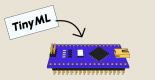
Introduction to TinyML
- Defining TinyML.
- Rationale for running AI on microcontrollers.
- Benefits and challenges of TinyML.
Establishing the TinyML Development Environment
- Overview of TinyML toolchains.
- Installation of TensorFlow Lite for Microcontrollers.
- Utilizing Arduino IDE and Edge Impulse.
Constructing and Deploying TinyML Models
- Training AI models suitable for TinyML.
- Converting and compressing AI models for microcontrollers.
- Deploying models on low-power hardware.
Enhancing Energy Efficiency in TinyML
- Quantization techniques for model compression.
- Addressing latency and power consumption constraints.
- Balancing performance with energy efficiency.
Real-Time Inference on Microcontrollers
- Processing sensor data using TinyML.
- Executing AI models on Arduino, STM32, and Raspberry Pi Pico.
- Optimizing inference for real-time applications.
Integrating TinyML with IoT and Edge Applications
- Connecting TinyML with IoT devices.
- Wireless communication and data transmission methods.
- Deploying AI-powered IoT solutions.
Real-World Applications and Future Trends
- Use cases in healthcare, agriculture, and industrial monitoring.
- The future trajectory of ultra-low-power AI.
- Next steps in TinyML research and deployment.
Summary and Next Steps
Requirements
- A foundational understanding of embedded systems and microcontrollers
- Prior experience with AI or machine learning fundamentals
- Basic proficiency in C, C++, or Python programming
Target Audience
- Embedded engineers
- IoT developers
- AI researchers
Testimonials (1)
That we can cover advance topic and work with real-life example