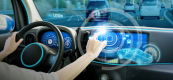
Artificial Intelligence (AI) in Automotive Training Course
Course Outline
Current State of the Technology
- Existing applications
- Potential future applications
Rules-Based AI
- Simplifying decision processes
Machine Learning
- Classification
- Clustering
- Neural Networks
- Varieties of Neural Networks
- Demonstration of working examples and discussion
Deep Learning
- Essential terminology
- Determining when to apply Deep Learning and when not to
- Estimating computational resources and costs
- Concise theoretical overview of Deep Neural Networks
Practical Deep Learning (Primarily using TensorFlow)
- Data preparation
- Selecting loss functions
- Choosing the appropriate neural network architecture
- Balancing accuracy against speed and resource usage
- Training neural networks
- Evaluating efficiency and error rates
Application Examples
- Anomaly detection
- Image recognition
- ADAS
Requirements
Open Training Courses require 5+ participants.
Artificial Intelligence (AI) in Automotive Training Course - Booking
Artificial Intelligence (AI) in Automotive Training Course - Enquiry
Artificial Intelligence (AI) in Automotive - Consultancy Enquiry
Upcoming Courses
Related Courses
Advanced Path Planning Algorithms for Autonomous Vehicles
21 HoursThis instructor-led, live training in Malaysia (online or onsite) is aimed at advanced-level robotics engineers and AI researchers who wish to implement sophisticated path planning algorithms to enhance autonomous vehicle performance.
By the end of this training, participants will be able to:
- Understand the theoretical foundations of advanced path planning algorithms.
- Implement algorithms such as RRT*, A*, and D* for real-time navigation.
- Optimize path planning for obstacle avoidance and dynamic environments.
- Integrate path planning algorithms with sensor data for enhanced accuracy.
- Evaluate the performance of various algorithms in practical scenarios.
AI and Deep Learning for Autonomous Driving
21 HoursThis instructor-led, live training in Malaysia (online or onsite) is designed for advanced data scientists, AI specialists, and automotive developers looking to build, train, and optimise AI models for autonomous driving applications.
By the end of the programme, participants will be able to:
- Understand the basics of AI and deep learning as they relate to autonomous vehicles.
- Implement computer vision methods for real-time object detection and lane following.
- Use reinforcement learning to enable decision-making in self-driving systems.
- Apply sensor fusion techniques to improve perception and navigation.
- Develop deep learning models to predict and analyse driving scenarios.
AlphaFold: AI-Driven Protein Structure Prediction and Interpretation
7 HoursThis instructor-led, live training in Malaysia (online or onsite) is aimed at biologists who wish to understand how AlphaFold works and use AlphaFold models as guides in their experimental studies.
By the end of this training, participants will be able to:
- Understand the basic principles of AlphaFold.
- Learn how AlphaFold works.
- Learn how to interpret AlphaFold predictions and results.
Automotive Software Development with AUTOSAR: Classic and Adaptive Platforms
28 HoursThis live, instructor-led course in Malaysia focuses on the design and development of automotive software using AUTOSAR Classic and Adaptive platforms. Learners will acquire practical skills in configuring components, integrating ADAS software, and applying safety best practices through the use of industry-standard tools.
Autosar Introduction – Technology Overview
14 HoursThis instructor-led, live training in Malaysia (online or onsite) is primarily targeted at engineers who wish to use AUTOSAR to design automotive components.
By the end of this training, participants will be able to:
- Install and configure AUTOSAR.
- Set up a workflow.
- Navigate smoothly in the AUTOSAR environment.
- Work efficiently.
AUTOSAR Basic Software - A
28 HoursThis instructor-led live training, available online or onsite, is designed for intermediate-level embedded software developers and automotive engineers seeking to utilise the AUTOSAR Classic Platform to develop, integrate, and test standardised software components for electronic control units (ECUs).
Upon completion of this training, participants will be equipped to:
Install and configure AUTOSAR development tools, such as DaVinci Developer, EB Tresos, or ETAS ISOLAR-A/B.
Grasp the layered architecture of AUTOSAR and its Basic Software (BSW) modules.
Design and implement the AUTOSAR Operating System (OS) and Communication Stack (COM Stack).
Utilise CANoe or comparable tools for simulation, testing, and diagnostics within an AUTOSAR ecosystem.
AUTOSAR OS and COM Stack
28 HoursThis instructor-led, live training (online or onsite) targets intermediate-level embedded software developers or automotive engineers keen on understanding and configuring AUTOSAR OS (based on OSEK/VDX) and the COM Stack to facilitate reliable task scheduling and communication within automotive ECUs.
Upon completion of this training, participants will be able to:
- Grasp the AUTOSAR OS architecture and scheduling policies
- Implement and manage tasks, events, alarms, and counters
- Describe and configure the COM Stack layers, including PDUR and communication services
- Explain protocol stacks (CAN, LIN, FlexRay, Ethernet) and how AUTOSAR interfaces with them
- Configure OS and COM modules using industry-standard tools (Vector DaVinci or ETAS ISOLAR)
- Simulate and validate task and communication flow in an AUTOSAR-based ECU
Autonomous Vehicle Safety and Risk Assessment
21 HoursThis instructor-led, live training in Malaysia (online or onsite) is aimed at advanced-level safety engineers and automotive safety professionals who wish to develop comprehensive safety strategies for autonomous vehicles, including hazard analysis, functional safety assessments, and compliance with international standards.
By the end of this training, participants will be able to:
- Identify and assess safety risks associated with autonomous driving systems.
- Conduct hazard analysis and risk assessment using industry standards.
- Implement safety validation and verification methods for AV systems.
- Apply functional safety standards, such as ISO 26262 and SOTIF.
- Develop risk mitigation strategies for AV safety challenges.
Computer Vision for Autonomous Driving
21 HoursThis instructor-led, live training in Malaysia (online or onsite) is aimed at intermediate-level AI developers and computer vision engineers who wish to build robust vision systems for autonomous driving applications.
By the end of this training, participants will be able to:
- Understand the fundamental concepts of computer vision in autonomous vehicles.
- Implement algorithms for object detection, lane detection, and semantic segmentation.
- Integrate vision systems with other autonomous vehicle subsystems.
- Apply deep learning techniques for advanced perception tasks.
- Evaluate the performance of computer vision models in real-world scenarios.
Ethics and Legal Aspects of Autonomous Driving
14 HoursThis instructor-led, live training in Malaysia (online or onsite) is designed for beginner-level professionals eager to explore the ethical dilemmas and legal frameworks surrounding autonomous vehicles.
Upon completion of this training, participants will be able to:
- Grasp the ethical implications of AI-driven decision-making in autonomous vehicles.
- Analyze global legal frameworks and policies governing self-driving cars.
- Examine liability and accountability in the event of autonomous vehicle accidents.
- Evaluate the balance between innovation and public safety in autonomous driving laws.
- Discuss real-world case studies involving ethical dilemmas and legal disputes.
EV Powertrains and Battery Technology
14 HoursThis instructor-led, live training in Malaysia (online or onsite) is tailored for intermediate-level professionals seeking a comprehensive understanding of EV powertrain architectures, battery chemistry, Battery Management Systems (BMS), and the factors affecting energy efficiency in electric vehicles.
Upon completion of this training, participants will be able to:
- Comprehend the structure and operational functions of EV powertrains.
- Analyze various battery chemistries and their respective applications within EVs.
- Apply battery management techniques to improve performance and ensure safety.
- Assess energy efficiency across different EV configurations.
Introduction to Autonomous Vehicles: Concepts and Applications
14 HoursThis instructor-led, live training in Malaysia (online or onsite) is aimed at beginner-level professionals and enthusiasts who wish to understand the fundamental concepts, technologies, and applications of autonomous vehicles.
By the end of this training, participants will be able to:
- Understand the key components and working principles of autonomous vehicles.
- Explore the role of AI, sensors, and real-time data processing in self-driving systems.
- Analyze different levels of vehicle autonomy and their real-world applications.
- Examine the ethical, legal, and regulatory aspects of autonomous mobility.
- Gain hands-on exposure to autonomous vehicle simulations.
Multi-Sensor Data Fusion for Autonomous Navigation
21 HoursThis instructor-led, live training in Malaysia (online or onsite) is aimed at advanced-level sensor fusion specialists and AI engineers who wish to develop multi-sensor fusion algorithms and optimise real-time navigation in autonomous systems.
By the end of this training, participants will be able to:
- Understand the fundamentals and challenges of multi-sensor data fusion.
- Implement sensor fusion algorithms for real-time autonomous navigation.
- Integrate data from LiDAR, cameras, and RADAR for perception enhancement.
- Analyse and evaluate fusion system performance under various conditions.
- Develop practical solutions for sensor noise reduction and data alignment.
Sensor Technologies in Autonomous Vehicles
21 HoursThis instructor-led, live training in Malaysia (online or onsite) is aimed at intermediate-level engineers, automotive professionals, and IoT specialists who wish to understand the role of sensors in self-driving cars, covering LiDAR, radar, cameras, and sensor fusion techniques.
By the end of this training, participants will be able to:
- Understand the different types of sensors used in autonomous vehicles.
- Analyse sensor data for real-time vehicle perception and decision-making.
- Implement sensor fusion techniques to improve vehicle accuracy and safety.
- Optimize sensor placement and calibration for enhanced autonomous driving performance.
Vehicle-to-Everything (V2X) Communication for Autonomous Cars
21 HoursThis instructor-led, live training in Malaysia (online or onsite) is designed for intermediate-level network engineers and automotive IoT developers who want to grasp and apply V2X communication technologies in autonomous vehicles.
Upon completing this training, participants will be capable of:
- Gaining a solid understanding of V2X communication fundamentals.
- Evaluating V2V, V2I, V2P, and V2N communication frameworks.
- Implementing V2X protocols like DSRC and C-V2X.
- Creating simulations for connected vehicle ecosystems.
- Tackling cybersecurity and privacy issues within V2X networks.